
How EsDeeKid Built a Mystery Around His Music — And What Artists Can Learn From It
- alex stretton
- 6 hours ago
- 10 min read

There are plenty of artists trying to get noticed right now.
Everyone is posting.
Everyone is releasing.
Everyone is making TikToks.
Everyone is trying to find the next trend.
And then there's EsDeeKid.
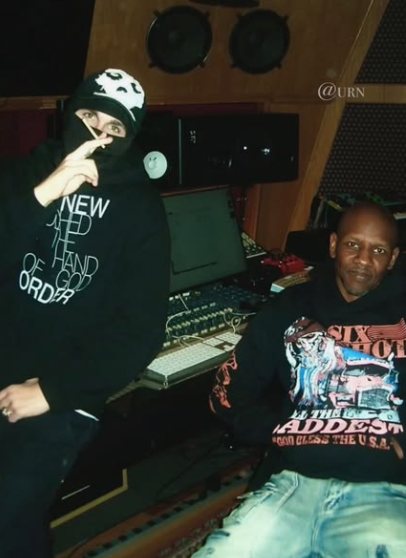
A masked rapper from Liverpool who managed to turn anonymity, a distinct Scouse identity, internet culture and a very recognisable sound into something much bigger than just a collection of songs.
And whether you love the music or hate it, there's something worth paying attention to here.
Because EsDeeKid didn't simply get attention because somebody decided to give him attention.
He built a world around the music.
And in an industry where everybody is fighting for the same few seconds of someone's attention, that's becoming incredibly important.
So, who actually is EsDeeKid?
That's part of the problem.
Nobody really knows.
Or, at least, the mystery is very much part of the point.
EsDeeKid is a Liverpool rapper who has built his public identity around keeping his face hidden, usually behind a balaclava or other face covering.
His music combines a heavy Scouse accent with distorted, abrasive and lo-fi production, placing him firmly within the internet-first UK underground sound that's been developing around artists such as Fakemink and others.
His debut album, Rebel, arrived in June 2025 and helped turn the underground attention surrounding him into something considerably bigger. Pitchfork described the project as a breakout debut, while noting that “LV Sandals,” featuring fakemink and Rico Ace, had become an important part of the album's momentum. The album subsequently reached the UK Top 10.
But the music is only one part of the story.
Because then there's the mask.
Then there's the accent.
Then there's the internet.
And eventually...
There was Timothée Chalamet.
The strangest marketing campaign nobody planned
If you've spent any time online, you may have seen the theory.
Is EsDeeKid actually Timothée Chalamet?
Yes.
Seriously.
The Hollywood actor somehow became the subject of a viral conspiracy theory suggesting that he was secretly living a double life as a masked Liverpool rapper.
The theory took off across TikTok and other social platforms in November 2025, with people pointing towards supposed similarities between the two, Chalamet's interest in rap, his previous teenage rap persona “Lil Timmy Tim,” and various other completely unhinged pieces of supposed evidence.
The funny thing is that the theory probably wouldn't have travelled nearly as far if EsDeeKid wasn't already interesting.
The mystery was already there.
The mask was already there.
The anonymity was already there.
People were already asking:
"Who is this guy?"
The Timothée Chalamet theory simply gave the internet something to run with.
And run with it they did.
Even Chalamet himself was asked about the rumours and responded cryptically rather than giving a straightforward denial.
Then the story got even stranger.
Chalamet eventually appeared alongside EsDeeKid on a version of “4 Raws,” turning what had started as an absurd internet theory into an even bigger piece of internet culture.
Whether you think the whole thing is hilarious, clever, ridiculous or all three...
It worked.
And that's where artists should start paying attention.
Lesson 1: You don't have to show people everything
We're living in an age where artists are encouraged to share everything.
Your breakfast.
Your studio.
Your bedroom.
Your relationship.
Your childhood.
Your location.
Your daily routine.
Your face.
Your life.
And if you don't share enough, apparently you're doing social media wrong.
But EsDeeKid demonstrates the opposite possibility.
What if you deliberately don't show people?
Mystery is powerful.
When somebody knows everything about you, there's nothing left to discover.
But when there are unanswered questions, people start filling in the gaps themselves.
Who is he?
What does he look like?
Where exactly did he come from?
Why does he wear the mask?
What's underneath it?
Is there actually a story?
Is the mystery part of the music?
Suddenly you're not just listening to a song.
You're investigating something.
And that's a very different relationship with an artist.
But don't misunderstand the lesson
The lesson isn't:
"Put on a balaclava and you'll become famous."
Please don't do that.
The lesson is:
Give people something to wonder about.
Your mystery might have nothing to do with hiding your face.
Maybe it's your visual world.
Maybe it's your lyrics.
Maybe it's a fictional character.
Maybe it's an unusual live show.
Maybe it's a strange recurring symbol.
Maybe you release music without explaining everything.
Maybe you create a story around your project.
The important thing is that there is something people can discover.
Lesson 2: Your identity can be your advantage
One of the most obvious things about EsDeeKid is that he sounds like where he's from.
That matters.
The Liverpool accent isn't something he appears to be trying to remove from his music to make himself sound more “international.”
It's part of the identity.
It's part of the appeal.
And in a world where music can sometimes become incredibly polished and interchangeable, sounding like you can be a competitive advantage.
Think about it.
There are thousands of rappers.
Thousands of producers.
Thousands of people making trap beats.
Thousands of people making melodic rap.
Thousands of people trying to make something that sounds “global.”
But there is only one person who has your voice, your experiences, your accent, your references and your perspective.
That's valuable.
Stop trying to sound like everyone else
This is something independent artists should really think about.
If you make music that sounds like everybody else...
Why should somebody choose you?
That's not meant to be harsh.
It's just reality.
If there are 10,000 songs that sound similar, the artist with the strongest identity has an advantage.
EsDeeKid's sound is not necessarily designed to appeal to everybody.
And that's probably part of why it works.
The rough edges are part of the character.
The accent is part of the character.
The production is part of the character.
The anonymity is part of the character.
The internet culture surrounding the project is part of the character.
It all feels connected.
That's branding.
Not a logo.
Not a colour palette.
Not just a font.
A feeling.
Lesson 3: Give people a reason to talk about you
Here's something artists often get wrong.
They think their job is simply to promote their song.
So they post:
“NEW SONG OUT NOW.”
Then:
“STREAM MY NEW SONG.”
Then:
“LINK IN BIO.”
And then they're confused when nobody talks about it.
But people don't usually share advertisements because they're advertisements.
They share things that make them feel something.
Something funny.
Something controversial.
Something impressive.
Something confusing.
Something relatable.
Something unexpected.
Something that makes them say:
"What the hell is this?"
EsDeeKid's anonymity naturally created that reaction.
And then the internet did what the internet does.
People started talking.
Lesson 4: You can turn your audience into detectives
This might be one of the most interesting things about the EsDeeKid story.
His audience wasn't simply consuming the content.
They were investigating it.
That's powerful.
Because now the audience is doing some of the marketing for you.
People make theories.
People create TikToks.
People post screenshots.
People debate.
People comment.
People make memes.
People explain the story to their friends.
That is organic growth.
You haven't necessarily paid for any of it.
Your audience is creating a second layer of content around the artist.
Obviously, you can't force this.
But you can create an environment where it becomes possible.
Give people things to discuss.
Give them questions.
Give them details.
Give them Easter eggs.
Give them stories.
Give them something they can interpret.
Lesson 5: TikTok doesn't have to be the destination
It's easy to look at an artist's success on TikTok and think:
"I need to go viral on TikTok."
That's the wrong lesson.
The better lesson is:
"How can I use short-form content to introduce people to my world?"
A viral video is temporary.
A fan can last for years.
That's why artists need to think beyond views.
If someone discovers you through a 15-second clip, what happens next?
Do they search your name?
Do they listen to your music?
Do they follow you?
Do they watch another video?
Do they understand who you are?
Do they have a reason to come back?
That's the difference between going viral and building an artist career.
Lesson 6: Don't be afraid of being niche
This is a big one.
Artists often think:
"I need to appeal to everyone."
You probably don't.
In fact, trying to appeal to everyone can make you incredibly forgettable.
EsDeeKid's music, visuals and identity aren't designed to feel completely neutral.
They have an edge.
They have a specific audience.
And that audience can become incredibly passionate.
Think about it.
Would you rather have:
100,000 people who vaguely know who you are?
Or:
10,000 people who genuinely care about everything you do?
The second group can be extremely powerful.
They listen.
They share.
They buy.
They attend shows.
They create content.
They defend you.
They tell friends.
They become part of the culture around the artist.
That's what you want.
Lesson 7: Your region isn't something you necessarily need to escape
There's something else worth taking from EsDeeKid's rise.
Liverpool is audible.
You hear it.
The accent is unmistakable.
And that gives the music a sense of place.
That's important because music is increasingly global.
You could be listening to someone from Liverpool, London, Manchester, New York, Paris, Lagos or Seoul within seconds of each other.
So why hide where you're from?
Your city can be part of your identity.
Your slang.
Your accent.
Your stories.
Your local references.
Your environment.
Your culture.
Those things make your music more specific.
And paradoxically, being more specific can make you more interesting to people somewhere completely different.
You don't necessarily become global by removing where you're from.
Sometimes you become global because people can hear exactly where you're from.
Lesson 8: The internet loves a story
This is probably the biggest takeaway.
EsDeeKid didn't simply become a rapper.
He became a story.
The masked Liverpool rapper.
The strange internet aesthetic.
The distinctive voice.
The underground scene.
The viral songs.
The mystery.
The conspiracy.
The memes.
The collaborations.
The rise.
All of these things exist around the music.
And that's important.
Because in 2026, an artist isn't necessarily competing only with other artists.
You're competing with everything.
Millions of videos.
Millions of songs.
Millions of creators.
Millions of things fighting for attention.
A song might get somebody's attention for three minutes.
A story can keep somebody interested for months.
But here's where artists need to be careful
Don't manufacture a fake personality just because you think it'll go viral.
People can smell that.
If your entire identity is a marketing strategy, eventually the cracks appear.
The strongest artist brands usually have something real underneath them.
Your story.
Your personality.
Your experiences.
Your influences.
Your city.
Your struggles.
Your sense of humour.
Your weirdness.
Your perspective.
Find the interesting parts of you.
Then turn the volume up.
What can the average independent artist actually take from EsDeeKid?
You might be thinking:
"That's great, but I'm not trying to become a mysterious masked rapper."
Good.
You don't have to.
Instead, ask yourself these questions.
What makes me recognisable?
Could somebody hear five seconds of your song and know it's you?
What makes me visually recognisable?
If your face disappeared from a post, would people still know it was yours?
What makes people curious?
Is there something about your story people would genuinely want to know?
What makes people talk?
Are you creating content people would actually send to their friends?
What makes you different?
Not “different” in the marketing sense.
Actually different.
What makes your fans feel involved?
Can they follow your journey rather than simply consume your releases?
You don't need a mask. You need an identity.
This is probably the simplest way of putting it.
The takeaway from EsDeeKid isn't:
"Hide your face."
It's:
"Build an identity strong enough that people want to know more."
Your identity could be completely different.
Maybe you're the artist who records everything in one take.
Maybe you're obsessed with vintage equipment.
Maybe every song connects to a larger story.
Maybe your live shows are chaotic.
Maybe your lyrics are brutally honest.
Maybe you're from a tiny town nobody has heard of.
Maybe you make music that sounds completely unlike what's currently trending.
Maybe your personality is the entire brand.
Maybe you're anonymous.
Maybe you're not.
There isn't one formula.
The biggest lesson: don't chase the viral moment — build the world around it
This connects directly to something we've talked about before.
An artist can go viral and disappear.
One song can explode.
One video can hit millions of views.
And then the attention moves somewhere else.
But artists who build something bigger have a chance of keeping people around.
That's what makes the EsDeeKid story interesting.
The songs are obviously important.
But so is everything surrounding them.
The mask.
The accent.
The visual identity.
The collaborations.
The underground scene.
The internet conversation.
The mystery.
The memes.
The story.
It becomes bigger than:
"Here's my new single."
It becomes:
"Here's this world you can step into."
And that's what independent artists should be thinking about
Your next release shouldn't just be a song.
Think about the world around the song.
What does it look like?
What does it sound like?
What does it represent?
What's the story?
What can people discover?
What can they share?
What can they argue about?
What can they become part of?
What happens after they hear it?
Because your goal isn't simply to get someone to press play.
Your goal is to make them think:
"Who is this?"
Then:
"I want to hear more."
Then:
"I want to follow them."
Then:
"I need to see what they do next."
That's how attention starts becoming a fan.
EsDeeKid proves you don't have to follow the obvious path
The music industry can sometimes make artists feel like there is a checklist.
Release music.
Post TikToks.
Make Reels.
Do trends.
Show your face.
Tell your story.
Go live.
Repeat.
And there is nothing inherently wrong with any of that.
But there are other ways.
EsDeeKid's rise is a useful reminder that being unusual can itself be a strategy.
Not fake unusual.
Not “let's do something weird because we need views.”
Actually unusual.
Actually memorable.
Actually yours.
In an oversaturated music industry, that matters.
Because when everybody is shouting...
Sometimes the artist who whispers something completely different is the one people turn around to listen to.
Final thought
You don't need to become EsDeeKid.
You shouldn't.
There is already an EsDeeKid.
And that's the whole point.
You need to become more yourself.
Find the thing that makes your music recognisable.
Find the thing that makes your story interesting.
Find the thing that makes people curious.
Find the thing that makes your fans feel like they're part of something.
Then build around it.
Because in an industry where everyone is fighting for attention, being talented isn't always enough.
You need to be remembered.
And sometimes the most powerful thing you can give people isn't another song asking them to listen.
It's a reason to wonder:
"Who is this artist... and what are they going to do next?"
That's where the real opportunity starts.
EsDeeKid
EsDeeKid Liverpool
EsDeeKid rise
EsDeeKid viral
EsDeeKid TikTok
EsDeeKid LV Sandals
EsDeeKid Phantom
EsDeeKid Rebel
EsDeeKid Timothée Chalamet
Liverpool rapper
masked rapper
anonymous rapper
UK underground rap
how to go viral as an artist
how musicians go viral
how to build an artist identity
music marketing
music promotion
independent artist
how to stand out as an artist
music industry 2026
TikTok music marketing
build a fanbase
organic growth
artist branding
viral music


Comments